

Garage Fire Protection Requirements To Know This October
Key Takeaways
1. Garage fires spread faster than most homeowners realize. Fire-rated garage doors and clear exit routes give you extra minutes to act.
2. Building and fire codes outline exact requirements for walls, ceilings, exits, and fire door maintenance that protect your property.
3. At Stewart Overhead Door, our certified technicians perform NFPA 80-compliant inspections and testing to make sure your fire-rated garage doors protect your property.
Why Garages Are a High-Risk Fire Hazard
Many garages contain both fire sources and fuel, usually in corners of cupboards or wedged behind boxes. Without alarms, a fire can grow for many minutes before anyone notices.
Another issue is that many modern garage doors and walls aren’t fire-rated. This means they can’t resist flames for long. Once fire breaches a non-rated garage door, it can spread into your main structure and threaten your entire building within minutes.
Here are some garage items and activities that can trigger a fire in seconds:
- Flammable liquids. Gasoline, oil, paint, and solvents release vapors that can start to burn with a single spark.
- Electrical malfunctions. Faulty wiring, overloaded outlets, or damaged battery chargers are frequent culprits.
- Heating appliances. Water heaters, dryers, and boilers can emit sparks or overheat nearby materials.
- Clutter and combustible storage. Cardboard, paper, rags, and wood piles feed flames rapidly once they start.
- Work projects. Welding, cutting, or sanding near flammable liquids can easily ignite fumes.
Even small oversights, like plugging a car’s block heater into a cracked extension cord or leaving tools on a cluttered bench, can turn into a disaster.
Beyond obvious hazards, hidden ones also increase the likelihood of fire. Examples include:
- Improper wiring or outdated circuits that can’t handle modern electrical loads
- Poor housekeeping, such as leaving oily rags or trash near heat sources
- Lack of inspection or maintenance, which allows small issues to go unnoticed
- Unsafe operating habits, like smoking or using open flames near vehicles or fuels
- Inadequate training or policies in commercial garages, where multiple people handle equipment daily
Remember, fire spreads faster than most people can react. Your garage door determines how much time you have to act, especially when your garage is connected to your home.
Non-rated doors can fail quickly and allow flames to move directly into your home or workspace. But fire-rated doors hold back heat and flames long enough for alarms to sound and you to evacuate safely.
At Stewart Overhead Door, we make sure your fire-rated garage door is doing its job. Our inspections follow National Fire Protection Association (NFPA) standards. We verify that your door will hold back flames long enough for alarms to sound and everyone to get out safely.
Garage Fire Protection Requirements

Garage fire safety requirements span from fire prevention to resistance to fire spread to inspection and testing.
1. Fire Prevention
Most garage fires can be avoided long before a single spark ever appears. Here’s what you need to do:
- Keep gasoline, oil, propane, and paint in safety containers or in a detached shed away from your home. The law requires that combustibles should not be stored in ways that create a fire hazard.
- Keep shelves organized, floors clear, and don’t let clutter creep near heaters or outlets.
- Store any rags soaked in grease, paint thinner, or motor oil in a non-combustible metal container with a self-closing lid.
- Have at least 36 inches of clearance around your fuse box or circuit breaker panel. This will help you cut power quickly if something sparks or overheats.
- Avoid using extension cords for charging power tools, e-bikes, or vehicles. Plug only one charging appliance per outlet, and check cords often for cracks or fraying.
- Call an electrician if you notice flickering lights, tripping breakers, or warm plugs. The law prohibits any temporary wiring that poses a fire risk. That includes overloaded or damaged cords.
- Always keep the burner access doors of gas-powered appliances closed, and clear a three-foot safety zone around them.
- Avoid storing boxes, tools, or cleaning products near gas-powered appliances. It takes only one stray spark to ignite a fuel vapor in the air.
2. Resistance to Fire and Fire Spread
Your garage walls and ceilings act as the first line of defense if a fire breaks out, so their construction and condition matter a lot. Here’s what you need to make sure of:
- Install a door between the garage and house that is at least 20-minute fire-rated. This is required by law.
- Ensure your garage door closes and latches automatically.
- Use a ceiling with a one-hour fire-resistance rating if there is living space above the garage.
- Install 1/2-inch gypsum board on the garage side of a shared wall as required by National Building Code (NBC 3.1.9.1).
- Check any holes or openings where cables or pipes run through. The law requires each penetration to be sealed with a firestop system.
- Install a hatch cover to stop flames from moving upward if your garage has attic access.
- Immediately repair any wall or ceiling that shows damage that might affect its fire-resistance rating.
3. Occupant Safety, Refuge, and Exits
When a fire breaks out, seconds matter. The path out of your garage needs to be ready long before an emergency ever happens. That’s where good exit planning comes in. Here’s what to do:
- Keep exits clear and easy to use. According to the law, exits must stay free of obstacles and in good condition. Don’t block stairs or walkways with boxes or cords.
- Ensure exit and access lights are always operational as required by law.
- Install lit exit signs in commercial garages for better visibility in smoke.
- Ensure the door between the garage and home opens into the garage to help contain fire and keep the escape path clear.
4. Fire Suppression
When it comes to stopping a fire before it spreads, detection and suppression systems do most of the heavy work. Here’s what you need to do:
- Install a heat alarm, not a smoke alarm, in your garage. It activates when temperatures rise too high (typically 135°F / 57°C), which reduces false alarms.
- Test all alarms monthly, replace batteries once a year, and swap out the entire unit every 10 years.
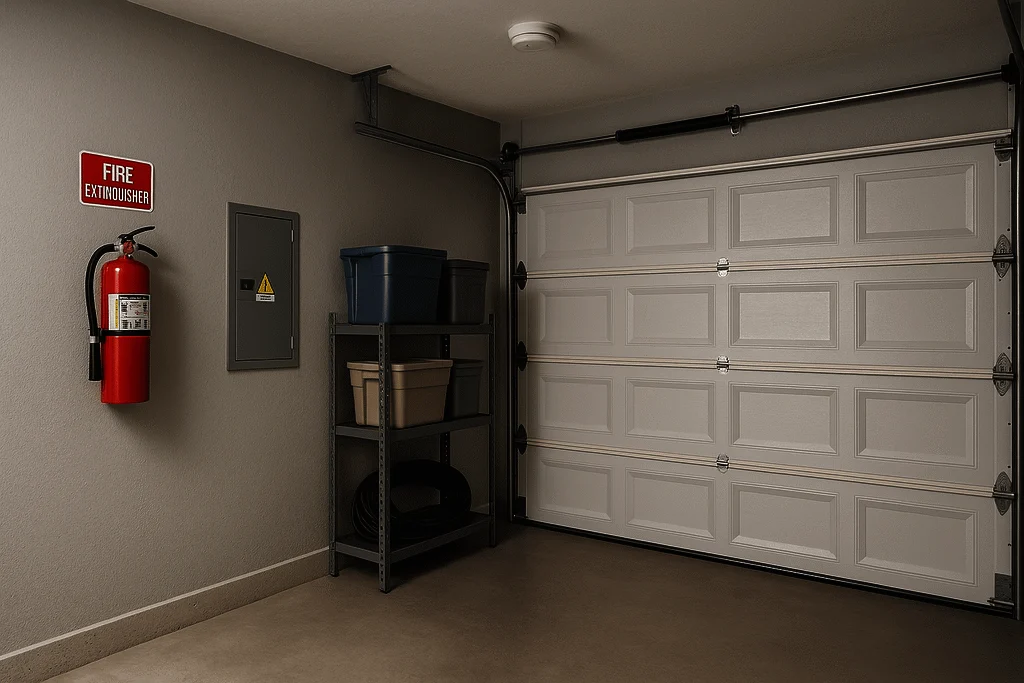
- Keep a multi-purpose fire extinguisher in an easily accessible location near your garage’s exit. This can help you grab it on your way out. Make sure everyone knows the PASS technique: pull the pin, aim the nozzle, squeeze the handle, sweep the base.
5. Fire Service Access and Facilities
Fire service access and facilities focus on making sure responders can reach, identify, and move within your garage safely. Here’s what to do:
- Keep driveways, lanes, and access routes clear at all times. Legally, these routes have to remain free of barriers so emergency crews can reach your garage without delay.
- Clearly label all electrical panels, gas valves, and utility shutoffs so firefighters can act fast to cut power or fuel sources.
Commercial or large garages need to make sure that firefighter access panels and internal routes are well-marked and unobstructed, especially near sprinkler controls and alarm panels.
6. Inspection, Testing, and Maintenance
Fire doors act as a barrier between your garage and the rest of your home or building. But they only work as designed when inspected and maintained regularly. Even a small gap, worn seal, or misaligned closer can cause early failure during a fire.
Here’s what you need to get checked to stay safe:
- Door seals and hardware (annually)
- Fire dampers and fire-stop flaps (on an approved schedule under OFC 2.2.3.5)
- Alarms, detectors, and suppression systems (annually)
Our team at Stewart Overhead Door performs fire door inspections and testing in full compliance with NFPA 80 and the Ontario local code.
We also verify that your fire-rated garage door components remain fully operable, with guides, bearings, and automatic releases maintained in good working order. This is required under OFC 2.2.3.2.
Protect Your Property With Certified Garage Door Inspections From Stewart Overhead Door
Fire Safety Month is a good time to pause and check: Are your garage and garage door really protected against fire? Over the years, seals crack, hinges shift, and closers wear down. These small changes can quietly break your door’s fire rating. You can’t always spot them, but we can.
At Stewart Overhead Door, fire door safety has been our specialty for over 60 years. We’re proud to be the trusted choice across southwestern Ontario for dependable inspections and repairs that protect homes, businesses, and lives.
Our certified inspectors test, verify, and fine-tune every part of your fire door system to make sure it performs exactly as it should under heat and pressure.
Every inspection follows NFPA 80 standards, and every repair makes sure your garage door never fails you. Schedule your inspection today and protect your property, assets, and the people inside.