


What Should You Know Before Buying a Sectional Garage Door?
Key Takeaways
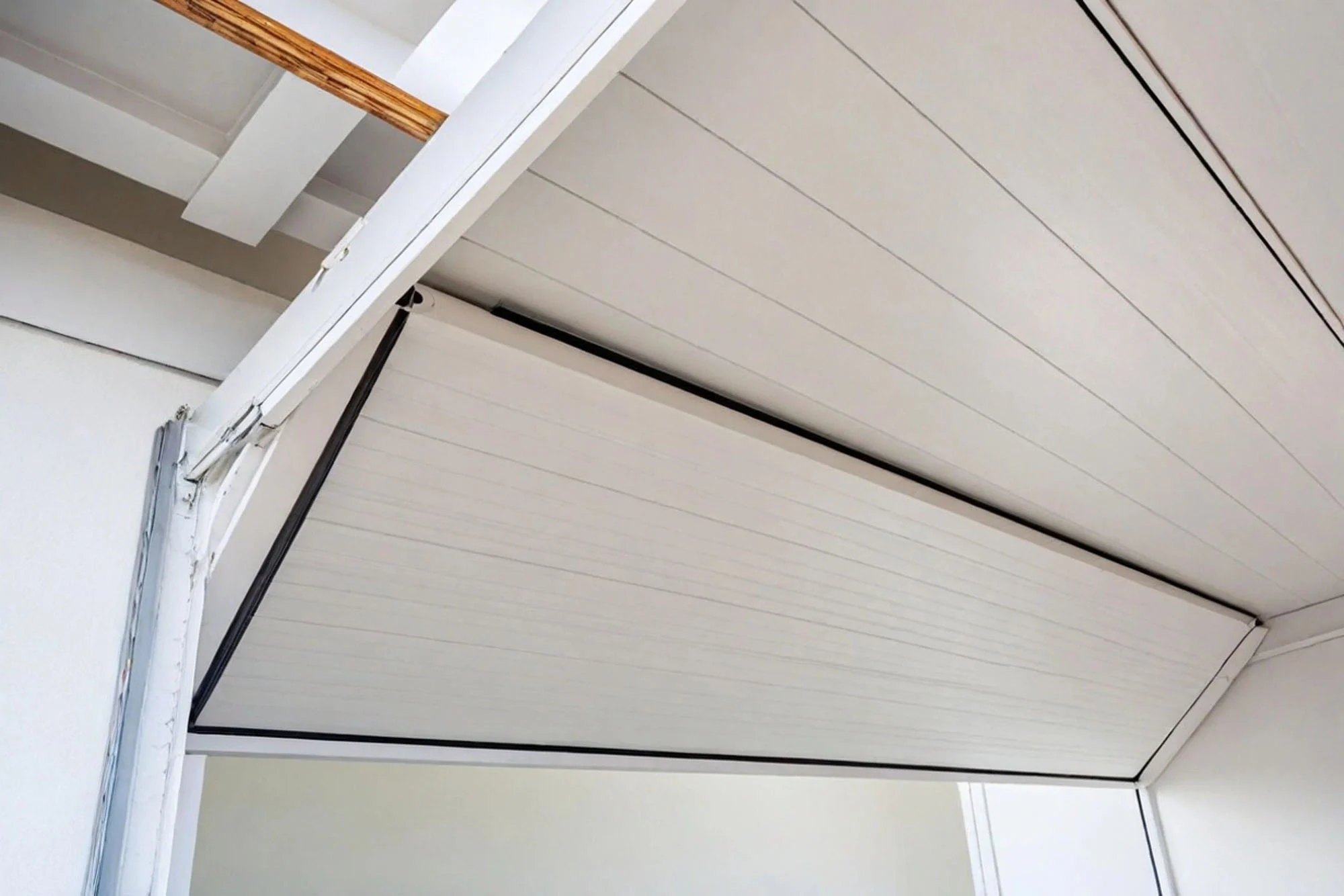
1. A sectional garage door is made of horizontal panels that bend over a curved track and lift overhead.
2. The factors that matter most when buying are material, insulation, construction layers, wind-load rating, and whether the door serves a home, a warehouse, or an agricultural building.
3. Stewart Overhead Door Co. Ltd. has supplied and installed sectional doors for residential, commercial, industrial, and agricultural clients across southwestern Ontario since 1964, matching the door to the building and the climate.
What Should You Consider When Buying a Sectional Garage Door
The most important thing to get right is matching the door to how the space is used and the climate it faces. A door that is perfect for an attached, heated garage is the wrong door for an unheated storage shed, and buying on price alone is the most common way people end up replacing a door too soon. Here is what to weigh, in roughly the order that matters most.
How the Space Is Used
Start with the building. An attached garage that shares a wall or ceiling with living space needs more insulation and tighter sealing, because heat lost through the door pulls warmth out of the house.
A detached, unheated garage used for storage can get by with far less. A commercial or agricultural building shifts the priorities toward durability, size, and how many times a day the door cycles. This single question drives almost every other choice below.
Climate and Exposure
In a climate like southwestern Ontario, the door faces cold winters, road salt, humidity, and big temperature swings. That favors insulated steel or composite over bare aluminum or untreated wood. Salt exposure near roads is hard on steel that is not properly finished, and humidity warps wood that is not sealed and maintained. The climate the door lives in should rule out materials that will not last in it.
Material
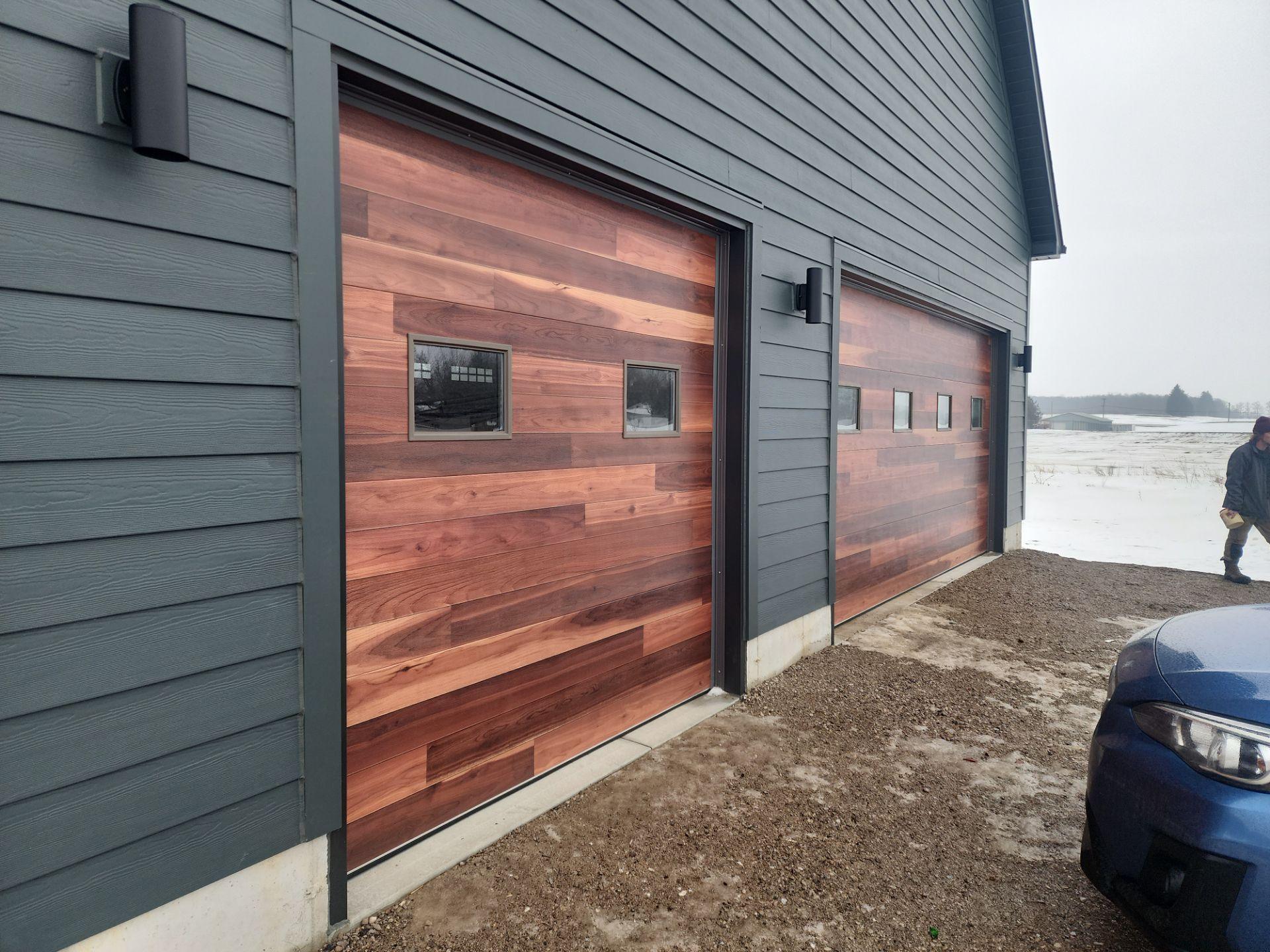
Material decides appearance, maintenance, and durability. Steel is the most popular for its strength, low upkeep, and value, and it takes insulation well. Wood offers a premium look but asks for regular sealing and costs more. Aluminum is light and rust-resistant but dents easily. Fiberglass and composite resist rust and humidity with little upkeep, at a mid-range cost. The right material balances the look you want against the maintenance you will actually do.
Insulation and Construction Layers
For any heated or attached space, insulation is one of the most important specs. The key at the buying stage is to match it to the use: high for an attached or conditioned space, low for a detached storage garage. Construction layers track closely with insulation, since a triple-layer door insulates and seals far better than a single-layer one.
Hardware, Cycle Life, and Security
How often the door opens decides the hardware it needs. A commercial or agricultural door cycling dozens of times a day needs high-cycle springs and heavier hinges than a home door used a few times. Heavier-gauge steel, reinforced struts, and quality locks matter more for commercial and ground-level access points. Under-specifying the hardware is a quiet way to shorten a door’s life.
Wind-Load Rating
In high-wind regions, or where local codes require it, the door should carry a wind-load rating suited to the area. The Door and Access Systems Manufacturers Association (DASMA) advises that a garage door be wind-rated for your region where codes apply, and be kept closed before any high-wind event, since an open door leaves the building interior exposed to structural damage.
Appearance and Budget
For homes, panel style, color, decorative hardware, and window inserts shape curb appeal and affect price, so they are worth deciding early. Rather than chasing the lowest sticker price, weigh the door as a long-term purchase, since the cheapest door that does not suit the climate or building usually costs more in the end.
What Are the Types of Sectional Garage Doors
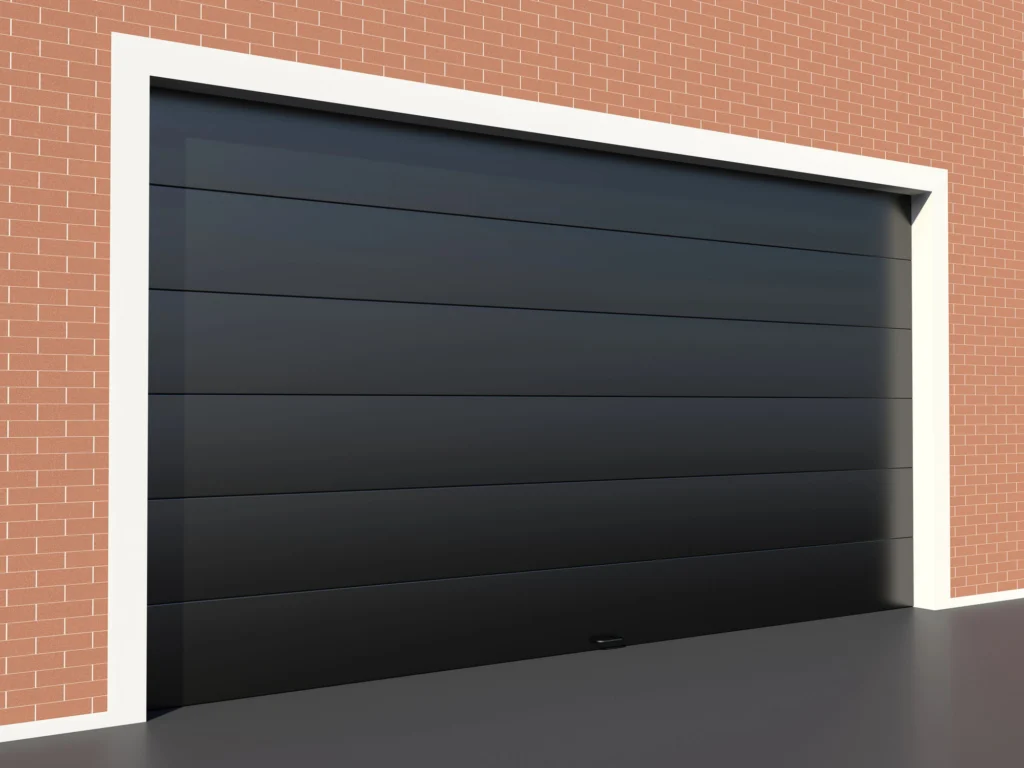
Sectional doors are grouped in a few different ways: by construction layers, by material, and by intended use. Each grouping affects price, durability, insulation, and appearance.
By Construction Layers
The number of layers is the clearest predictor of insulation, strength, and noise control.
- Single-layer (non-insulated): One skin of steel or aluminum. Lowest cost, minimal insulation, best for detached garages and unheated outbuildings.
- Double-layer (insulated): A steel skin with a layer of insulation backing it. A middle option that adds warmth and quiet.
- Triple-layer (insulated): Insulation sandwiched between two steel skins. The strongest, quietest, and best-insulated build, and the standard for attached garages and conditioned commercial space.
A three-layer door with insulation between two steel skins performs far better than a single-layer door with insulation panels simply attached to the back.
By Material
Material drives appearance, maintenance, and how the door holds up to a given climate.
| Material | Strengths | Tradeoffs |
| Steel | Strong, low maintenance, most cost-effective, takes insulation well | Can dent, needs care against rust in salt climates |
| Wood | Warm, premium look, custom options | Higher cost, needs regular sealing, swells in humidity |
| Aluminum | Light, rust-resistant, good for wide openings | Dents easily, lower insulation on its own |
| Fiberglass / composite | Resists rust and humidity, low upkeep | Can crack in hard impacts, mid-range cost |
By Use
A residential door, a commercial door, and an agricultural door are built to different priorities. Residential doors lead with curb appeal and quiet. Commercial doors lead with durability and high-cycle hardware that survives constant use.
Agricultural and industrial doors lead with size, clearance, and weather resistance for large openings. The same panel-and-track concept underpins all three, but the gauge of steel, the hardware, and the insulation are matched to the job.
Why Insulation Matters When Buying Sectional Garage Doors
Insulation determines how well the door holds temperature, and for any attached or conditioned space it is one of the most important specs to get right.
R-value measures how well the door resists heat flow, and a higher number is better. Residential sectional doors typically range from R-6 to R-18, while commercial doors can run from R-12 up to R-25.
The difference is meaningful: an R-16 door cuts heat loss by roughly 95% compared to about 90% for an R-8 door.
The insulation material matters as much as the rating. Two types dominate:
- Polyurethane: Blown between the steel skins, it expands to fill the whole cavity, delivers a higher R-value, and adds structural strength. The premium choice.
- Polystyrene: Rigid foam panels set into the door. Cheaper, lighter, decent noise control, but a lower R-value than polyurethane.
A high R-value does not help if air leaks around the panels and frame. Weatherstripping and proper sealing often matter as much as the insulation core, since gaps let warm air escape, no matter how good the door rating looks on paper.
Some professionals now point to U-factor, which measures heat loss across the entire door assembly rather than just the insulation core, as the more honest number.
How Do Residential and Commercial Sectional Doors Differ?
Residential and commercial sectional doors share the same basic mechanism but are engineered to different demands. The comparison below shows where they part ways.
| Factor | Residential | Commercial / Industrial |
| Priority | Curb appeal, quiet, insulation | Durability, cycle life, clearance |
| Typical R-value | R-6 to R-18 | R-12 to R-25 |
| Size | Single and double car | Wide and tall loading bays |
| Hardware | Standard-cycle springs and rollers | High-cycle springs, heavy hinges |
| Material focus | Steel, wood, composite for looks | Heavy-gauge steel, aluminum, full-vision |
| Track options | Standard lift | High-lift, vertical-lift for ceiling height |
For agricultural buildings, the priorities shift again toward very large openings, durability, and clearance for tall machinery. Stewart Overhead Door handles residential, commercial, and agricultural doors under one roof across southwestern Ontario, so a single team can spec and install whichever the building needs.
May is Garage Door Safety Month: Protect What Matters with Stewart Overhead Door
What Affects How Long a Sectional Garage Door Lasts?
A few habits and conditions move the needle most:
- Weatherstripping condition. Cracked or shrunken seals let in water, salt, and cold, which accelerates rust and wear. Seals are cheap to replace and worth checking yearly.
- Lubrication and balance. A door that is out of balance forces the opener and springs to work harder, shortening the life of both.
- Climate exposure. Road salt, humidity, and freeze-thaw cycles are hard on any door, which is why material choice matters so much in southwestern Ontario.
- Professional servicing. An annual tune-up catches small problems before they cascade into expensive ones.
A sectional door is a long-term purchase, so the factors that affect its lifespan are part of its real value. Two doors that cost the same at install can have very different lifespans depending on how they are built and cared for.
Construction quality leads the list. A triple-layer steel door with a polyurethane core resists denting, holds its shape, and shrugs off temperature swings better than a thin single-layer panel.
Hardware grade matters just as much. Springs are rated in cycles (one open and one close equals one cycle), and standard residential springs are often rated around 10,000 cycles, while high-cycle springs can run several times that. For a busy household or a commercial door, paying up for higher-cycle hardware pays off.
With good construction and routine care, a quality sectional door commonly lasts 15 to 30 years. A cheap door installed in a harsh climate and never serviced can fail in a fraction of that time.
How Stewart Overhead Door Helps You Choose the Right Sectional Door
Stewart Overhead Door Co. Ltd. has supplied and installed sectional doors across southwestern Ontario since 1964. We work with residential, commercial, industrial, and agricultural clients, which means we can match the door to the building rather than fitting the building to whatever is in stock.
We provide:
- Sectional doors for every setting: homes, warehouses, industrial plants, and farm buildings
- Insulated steel doors from Raynor and Northland in single, double, and triple-layer builds
- Material and R-value guidance matched to your climate and how the space is used
- Wind-load and code guidance for commercial and exposed installations
- Professional installation and service by certified technicians
- Service across London, Sarnia, Woodstock, Stratford, Chatham, and surrounding communities
Buying a sectional door is a long-term decision, and the right guidance up front prevents the expensive mistake of replacing a door that never fit the building in the first place.
What You Should Do Next
A sectional garage door is one of the largest moving parts of any building, and choosing well pays off for years in comfort, energy savings, and reliability.
- Define how the space is used. Attached or detached, heated or unheated, residential or commercial. This sets your insulation target.
- Match material and layers to your climate. Southwestern Ontario winters and road salt reward insulated steel or composite over bare aluminum.
- Contact Stewart Overhead Door for a consultation. We assess the building, recommend the right door, and handle professional installation. Call 519-652-8312 or 1-800-263-7010.