


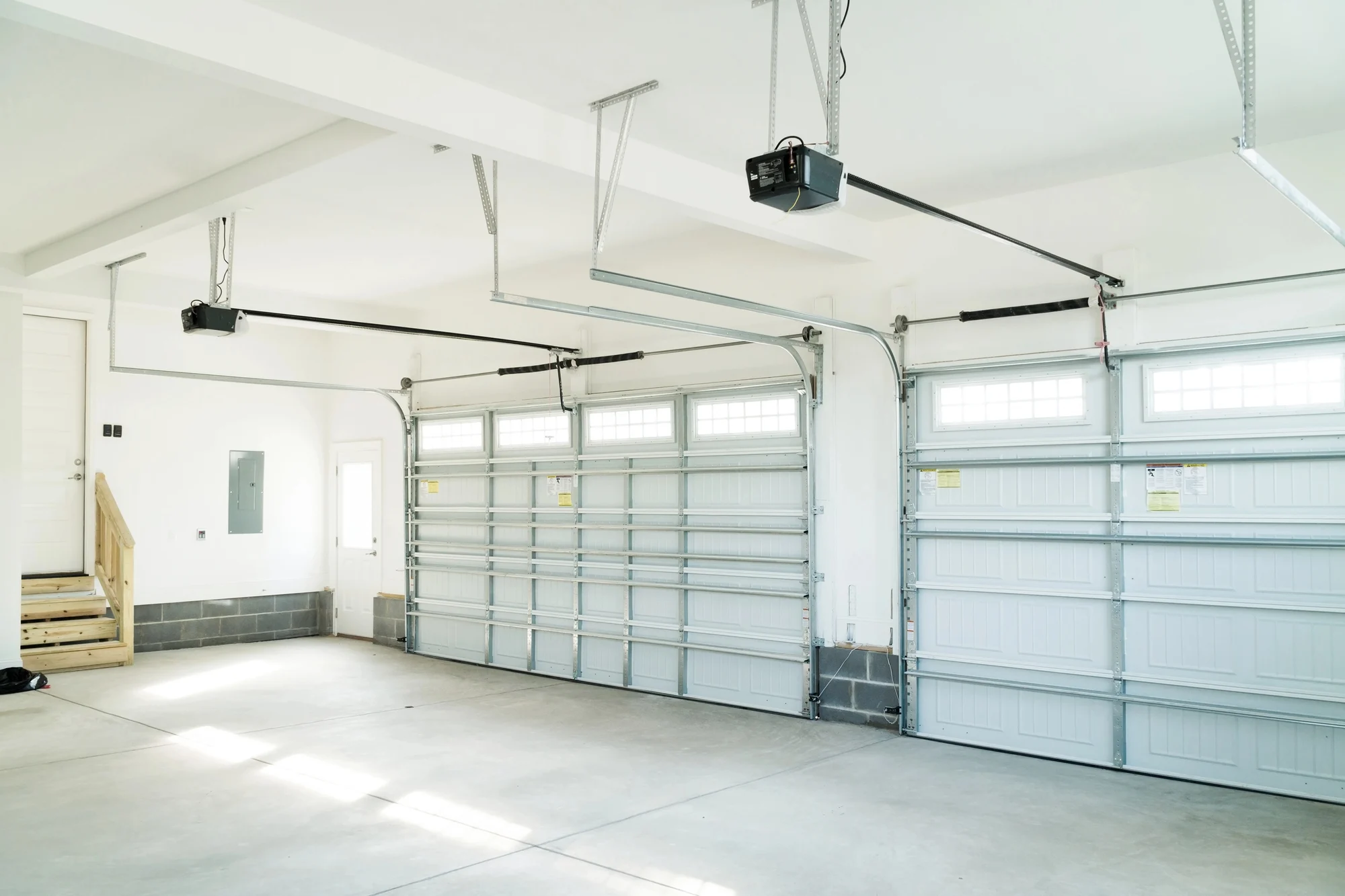
Garage Door Opener Not Working? Common Problems and Repairs
Key Takeaways
1. When a garage door opener stops working, check the power, controls, lock mode, and sensors before assuming the motor has failed.
2. Stop troubleshooting if the door is crooked, unusually heavy, off-track, or affected by a broken spring or cable.
3. Stewart Overhead Door provides professional opener diagnosis, repair, replacement, planned maintenance, and 24-hour emergency assistance across southwestern Ontario.
Why Is My Garage Door Opener Not Working?
“Before assuming the opener has failed, check that it has power, test both the remote and wall control, and inspect the safety photo-eyes for dirt or obstructions,” says Mark Rennison, Distribution Sales Manager at Stewart Overhead Door.
You should also check whether lock or vacation mode is enabled and make sure nothing is blocking the safety sensors near the floor.
The way the door behaves can offer an important clue. If the wall control works but the remote does not, the problem may involve the battery, programming, or signal. If the opener runs but the door stays still, the trolley may be disconnected, or the door could have a broken spring, cable, or drive component.
Stop operating the door if it becomes crooked, unusually heavy, stuck halfway, or begins making loud grinding or straining sounds. Repeatedly pressing the button could place additional stress on the opener and door system.
If basic checks do not restore safe operation, Stewart Overhead Door can inspect the complete system, identify the cause, and recommend the appropriate repair. For urgent after-hours help, call 519-808-1950.
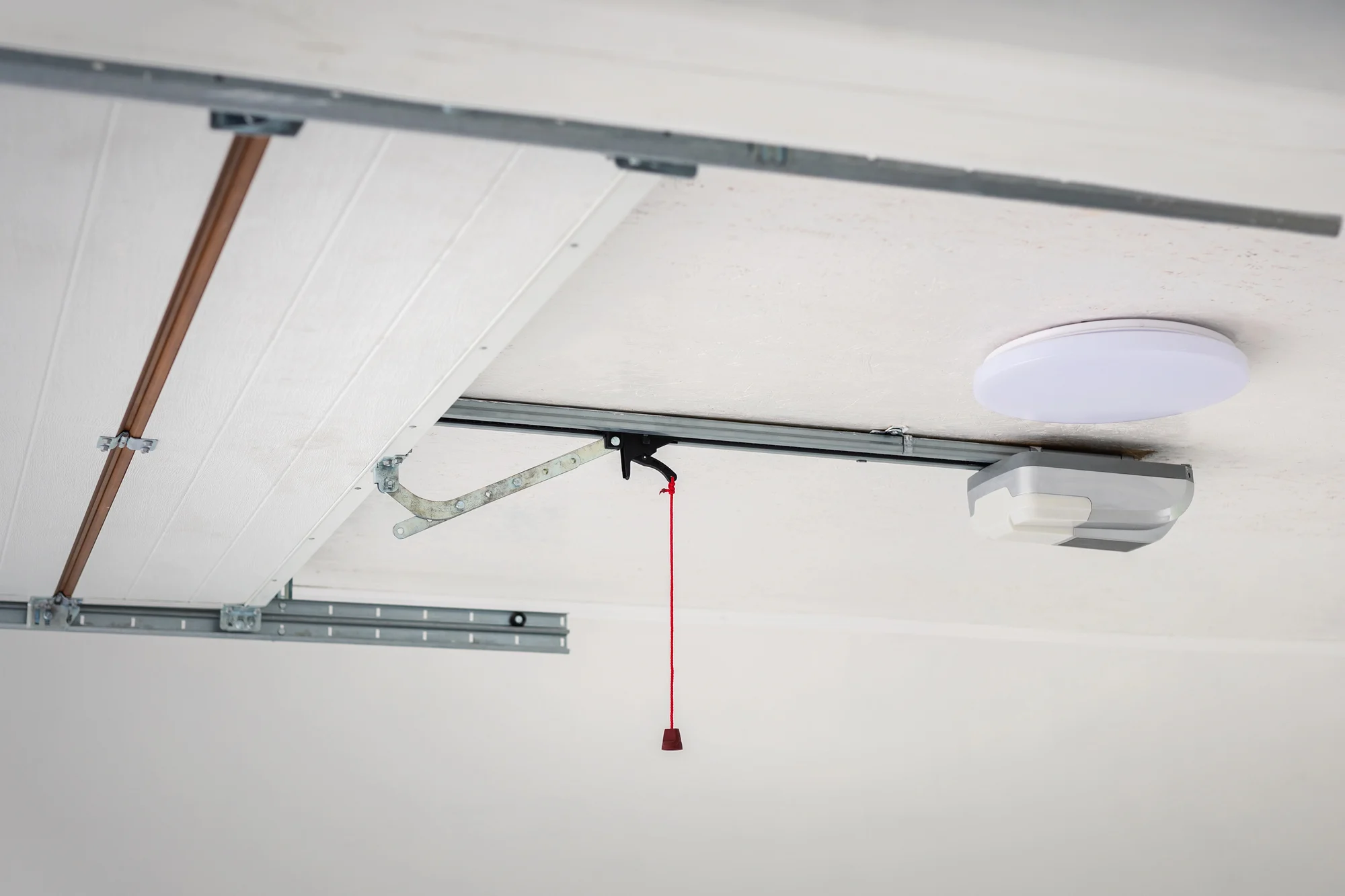
Common Problems with a Garage Door Opener
How the opener behaves can help narrow down the problem. Instead of repeatedly pressing the remote, watch and listen carefully for these symptoms. “One of the most common misdiagnoses is assuming the opener has failed when the actual problem lies with the garage door,” explains Mark Rennison, Distribution Sales Manager.
1. Nothing Responds
If the lights stay off and neither the remote nor the wall control works, the opener may have lost power. Check the plug, breaker, and nearby GFCI outlet. If power is available but the unit remains unresponsive, the wiring, motor, or logic board may need professional diagnosis.
2. The Wall Button Works, but the Remote Does Not
This usually points to a dead remote battery, lost programming, signal interference, or an activated lock mode. Replace the battery and review the opener’s settings before requesting repair.
3. The Motor Runs, but the Door Stays Still
The trolley may be disconnected, or the opener may have a damaged gear or drive component. A broken spring or cable can produce similar symptoms.
Stop operating the opener and inspect the door from a safe distance.
4. The Door Starts Moving and Reverses
An obstruction, a dirty or misaligned safety sensor, an incorrect travel setting, or mechanical resistance may cause the reversal. Clear the opening and gently clean the sensor lenses. Never bypass the safety system.
5. The Door Opens Only Partway
A weak or broken spring, a binding track, a damaged roller, or an opener-setting problem may prevent full movement. Stop using the door and schedule an inspection before the opener becomes overloaded.
6. The Door Looks Crooked or Feels Heavy
This often indicates a spring, cable, roller, or track failure. Do not operate or attempt to lift the door yourself, as it may move or fall unexpectedly.
7. Smart Controls Will Not Connect
Check the Wi-Fi signal, app updates, login details, device permissions, and firmware. If the wall control still works, the issue may be limited to connectivity or the smart controller.
If the door appears unstable or the cause remains unclear, contact Stewart Overhead Door before continued operation causes further damage.
How Stewart Overhead Door Diagnoses Garage Door Opener Problems
Several faults can produce the same symptoms, so reliable opener repair depends on testing the entire door system. Stewart Overhead Door checks the opener, controls, safety devices, lifting components, and door movement to determine whether the failure is electrical, mechanical, or related to the opener’s settings.
| System inspected | What the technician checks |
|---|---|
| Power and internal electronics | Outlet supply, wiring, capacitor, motor, and logic board |
| Remotes and controls | Batteries, programming, lock mode, receiver, keypad, and wall-control wiring |
| Safety sensors | Alignment, lenses, indicator lights, wiring, and reversal response |
| Motor and drive system | Gears, belt or chain, rail, trolley, motor noise, and signs of overloading |
| Springs and cables | Broken components, uneven lifting, door weight, and balance |
| Tracks and rollers | Bent tracks, worn rollers, damaged hinges, binding, and resistance |
| Travel and force controls | Closing position, opening limits, reversal behavior, and mechanical resistance |
| Smart-access system | Wi-Fi strength, software, account connection, firmware, and compatibility |
| Commercial operators | Motors, access controls, limit switches, gears, sensors, and high-cycle components |
| Aging or unsupported opener | Equipment age, parts availability, safety features, and replacement compatibility |
| Preventive servicing | Door balance, hardware wear, safety systems, controls, and developing faults |
| Urgent failure | Doors stuck open, off-track, unstable, or creating an immediate access or safety problem |
Stewart Overhead Door can inspect the complete system to determine whether a broken spring, loose cable, damaged track, or unbalanced door is preventing the garage door from opening, then repair the underlying mechanical problem.
If basic troubleshooting does not restore reliable operation, call Stewart Overhead Door at 519-652-8312. For urgent after-hours repairs, call 519-808-1950.
What Your Opener’s Blinking Lights May Mean
Blinking lights are often the opener’s way of identifying a specific fault. LiftMaster and Chamberlain systems may display codes through the UP and DOWN arrows, the LED beside the Learn button, or the main opener lights.
The exact format varies by model, so check the owner’s manual before making changes.
| LiftMaster or Chamberlain signal | What it commonly indicates | What you can check |
|---|---|---|
| 1 UP, 1 DOWN | Safety sensors are blocked, misaligned, disconnected, or affected by damaged wiring | Remove obstructions and gently clean both sensor lenses |
| 1 UP, 2 DOWN | The safety-sensor wires may be shorted or reversed | Look for visibly pinched or damaged low-voltage wiring, but do not attempt electrical repairs |
| 4 UP, 6 DOWN | The sensors are obstructed or out of alignment while the door is closing | Confirm that both sensors face each other and nothing interrupts the beam |
| Opener lights flash, and the door will not close | The safety sensors may be blocked, or the wall control’s Lock feature may be active | Clear the sensor path and check the wall control |
| LED beside the Learn button flashes repeatedly | The opener has stored a diagnostic code | Count the flashes and compare them with the chart for the exact model |
| Blue Wi-Fi light continues blinking | The opener may be in setup mode or unable to connect to the network | Check the router connection, Wi-Fi password, app, and manufacturer’s setup instructions |
| Sensor light remains off | The sensor may lack power or have damaged wiring | Confirm that the opener has power, then arrange service if the light stays off |
These signals help narrow down the problem, but they do not always identify its root cause. A sensor code, for example, may come from misalignment, damaged wiring, a failed sensor, or movement in the track or door frame.
Stewart Overhead Door’s residential repair services include sensor replacement and realignment, remote programming, motor repair or replacement, door-balance adjustment, and complete opener replacement. Its technicians can also restore app connectivity and other smart garage door opener features.
According to Mark Rennison, Distribution Sales Manager, the opener’s age, repair history, condition, parts availability, and safety features should guide the repair-or-replace decision:
“An older system that needs repeated repairs may cost more over time than investing in a newer, more reliable solution.”
If the opener lacks modern safety technology, battery backup, or smart-access features, Stewart can recommend and professionally install a compatible replacement through its garage door installation services.
Restore Safe and Reliable Garage Door Operation
Do not stand, walk, or place objects beneath an unstable garage door. If you notice smoke, fire, or an active electrical hazard, keep away from the system and contact emergency services first.
Review the signs that you need emergency garage door service. For an after-hours or time-sensitive repair, call Stewart Overhead Door’s emergency line at 519-808-1950.
A garage door opener rarely stops working at a convenient time. Pay attention to what the system is telling you. Blinking lights, grinding sounds, uneven movement, and repeated reversals are signs that something needs attention.
Addressing the problem early can prevent additional damage and help keep the door safe and dependable.
Here’s what you should be doing next:
- Make a note of the symptoms. Record unusual sounds, error codes, blinking lights, and which controls still work.
- Know when to stop. Do not keep pressing the button if the door is crooked, unusually heavy, off-track, or making alarming noises.
- Bring in Stewart Overhead Door. Since 1964, Stewart has helped homeowners, businesses, and agricultural operations across southwestern Ontario keep their doors moving safely. Call 519-652-8312 for scheduled service or 519-808-1950 when the problem cannot wait.