


Types of Garage Door Materials for Homeowners
Key Takeaways
1. Garage door materials affect durability, maintenance, insulation, and how well the door fits your home’s style.
2. Steel, wood, aluminum, vinyl, fiberglass, and composite each serve different needs based on climate, usage, and design preference.
3. Stewart Overhead Door can help you choose the right material and handle installation or repairs so your garage door performs well in Ontario conditions.
Common Types of Garage Door Materials
Below is a breakdown of the most common garage door materials, so you can compare what each offers and find the option that best fits your home.
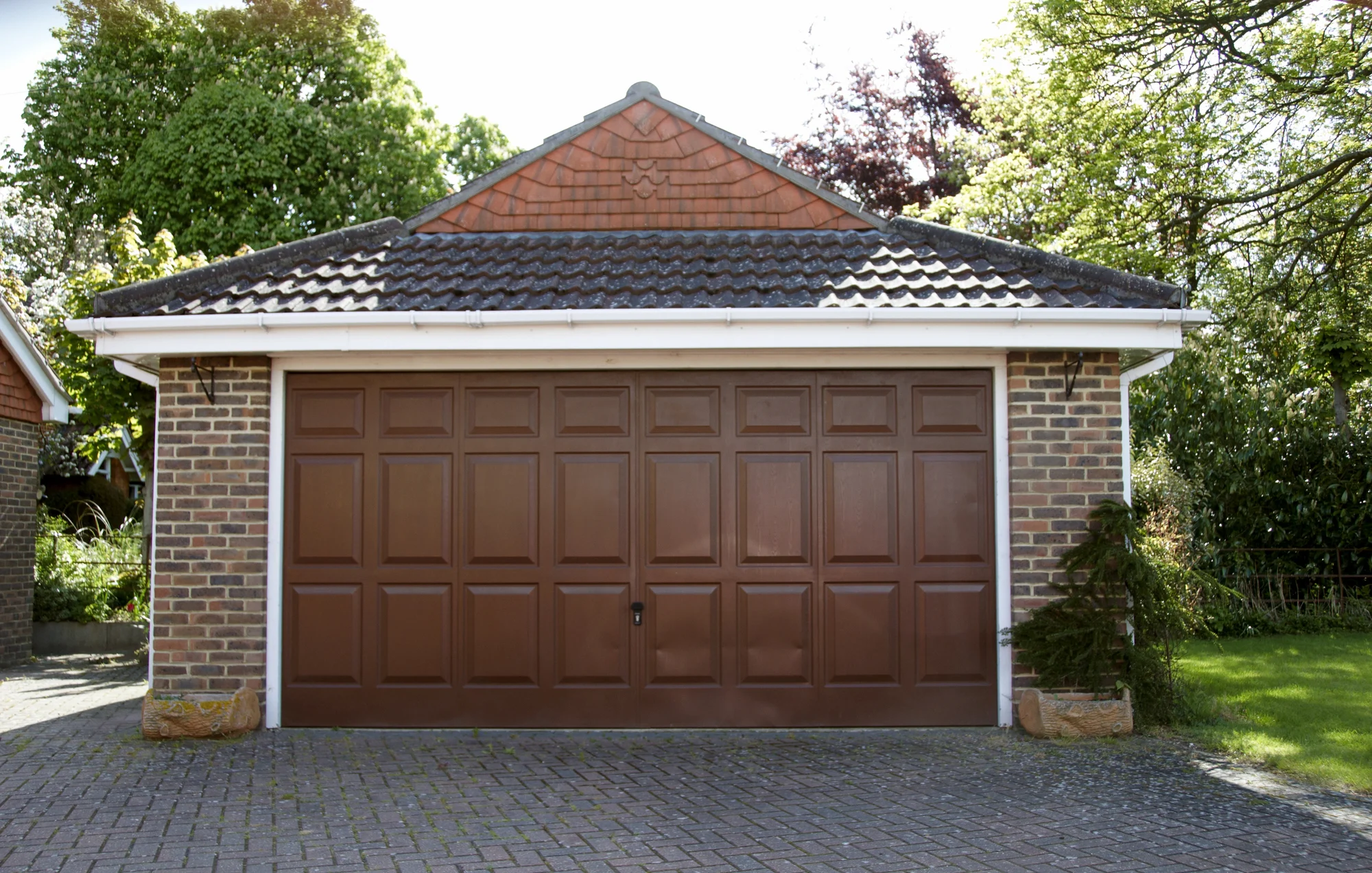
1. Steel Garage Doors
Climate suitability. Works well in most climates, especially cold regions when insulated, but needs protection in humid or coastal areas to prevent rust.
Steel is one of the most widely used garage door materials because it offers a strong balance between cost, durability, and design flexibility. It can be insulated for better energy efficiency and even finished to mimic wood, making it adaptable for both modern and traditional homes.
This material suits homeowners who want something reliable, long-lasting, and relatively low-maintenance without a high upfront cost.
Best for. Budget-conscious homeowners, high-use garages, and cold climates
Pros and Cons
| Pros | Cons |
|---|---|
| Affordable and widely available | Can rust if not maintained |
| Strong and durable | Can dent under impact |
| Available in many styles | May require occasional upkeep |
2. Wood Garage Doors
Climate suitability. Best for mild or dry climates; not ideal for areas with high moisture, heavy rain, or extreme temperature swings.
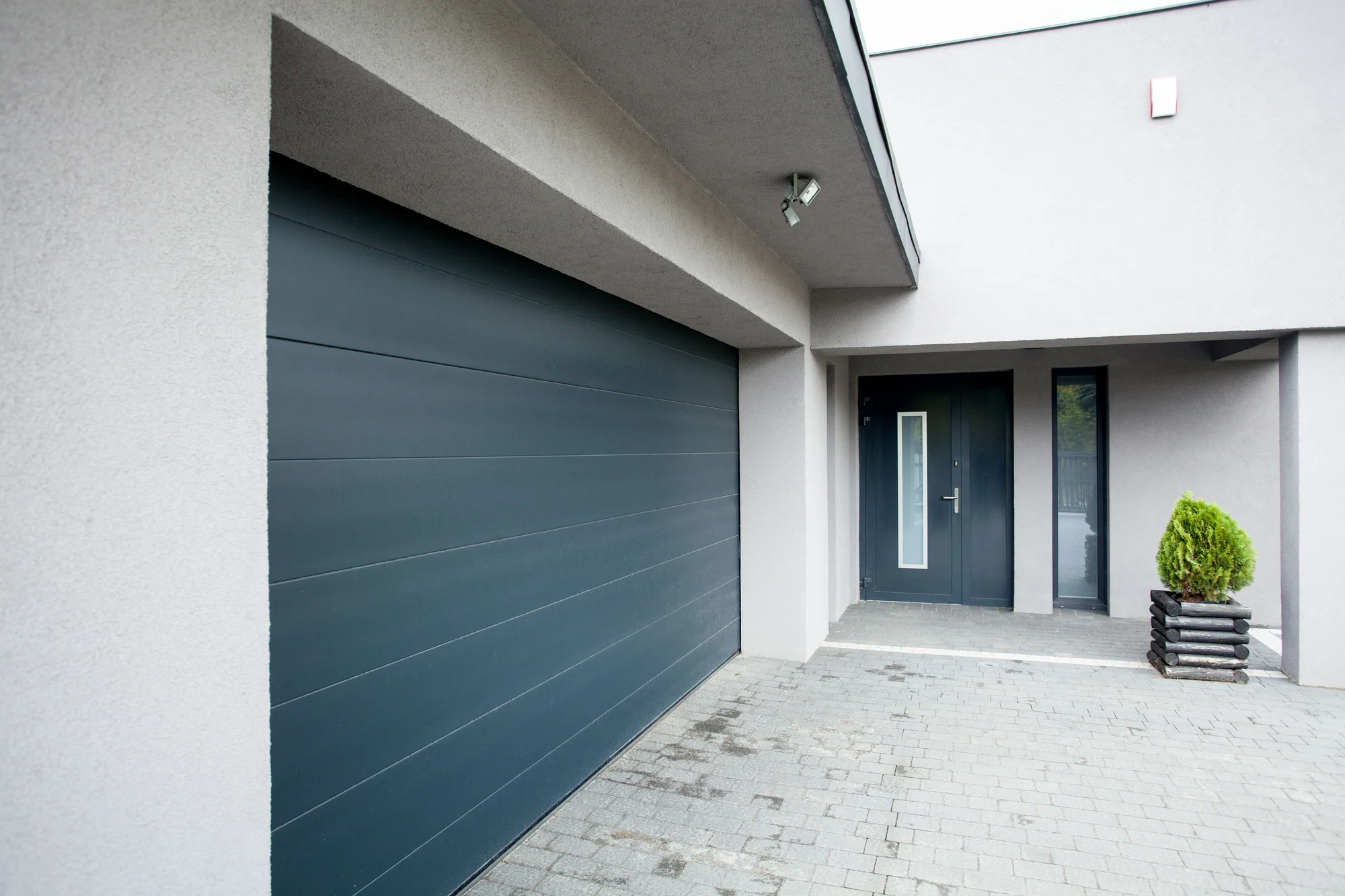
Wood garage doors are known for their natural beauty and high-end appearance. They add warmth and character that other materials try to replicate but rarely match perfectly.
However, wood requires regular maintenance such as sealing, staining, or painting to prevent warping, cracking, or rot. It suits homeowners who prioritize appearance and are comfortable with ongoing upkeep.
Best for. Traditional homes, high-end aesthetics, and design-focused homeowners
Pros and Cons
| Pros | Cons |
|---|---|
| Rich, natural appearance | High maintenance |
| Highly customizable | Expensive upfront |
| Strong curb appeal | Can warp or rot over time |
3. Aluminum Garage Doors
Climate suitability. Excellent for coastal or humid climates due to rust resistance.
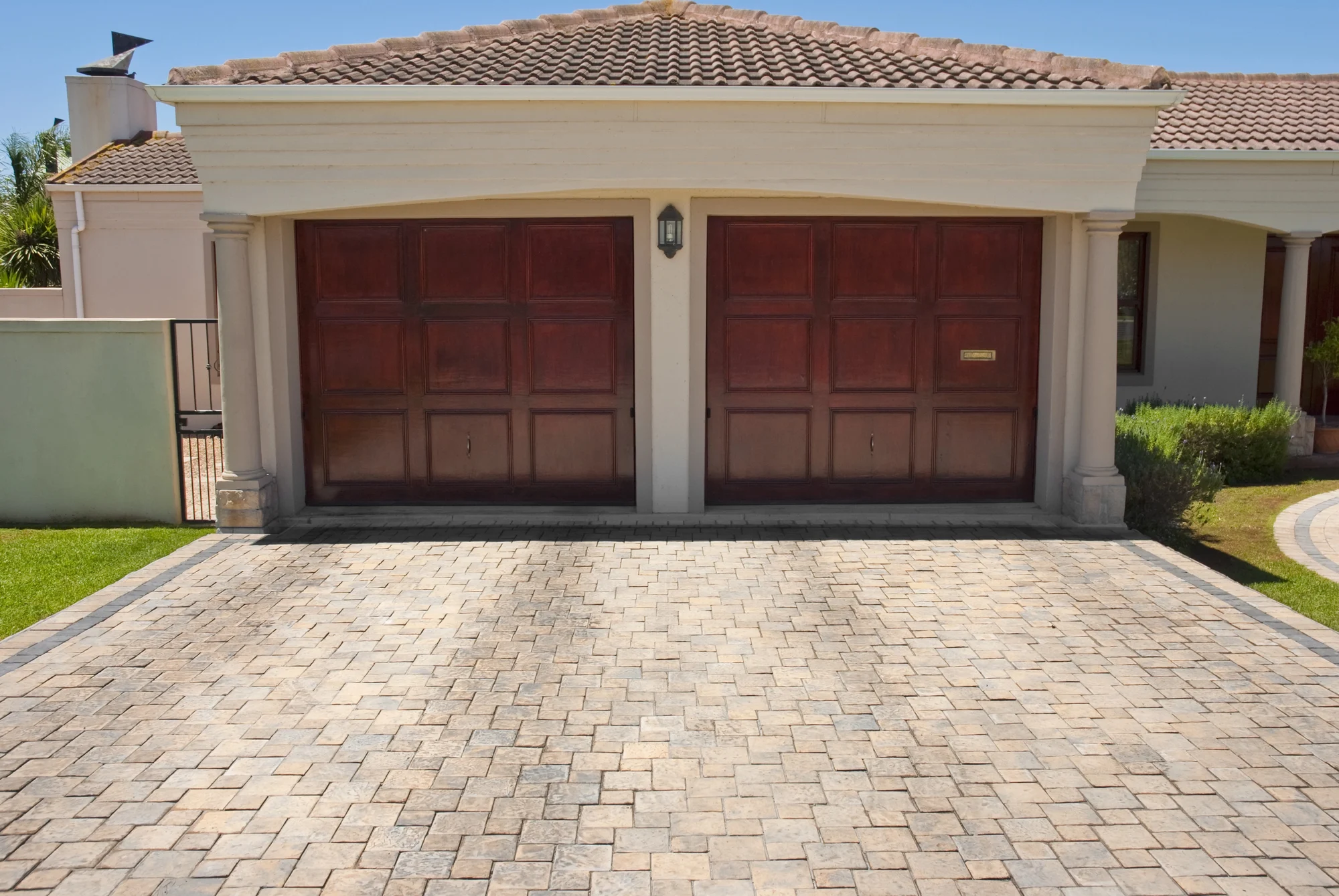
Aluminum doors are lightweight and often used in modern designs, especially with glass panels. They are easier to use with garage door openers because of their lower weight.
While they resist corrosion well, aluminum is softer than steel and may dent more easily. It suits homeowners who want a modern look and low maintenance in moisture-heavy environments.
Best for. Modern homes, humid or coastal areas
| Pros | Cons |
|---|---|
| Rust-resistant | Dents more easily |
| Lightweight and low strain | Lower insulation value |
| Clean, modern look | Less durable than steel |
4. Fiberglass Garage Doors
Climate suitability. Good for humid climates; less ideal for very cold regions, where it can become brittle.
Fiberglass doors are often used to mimic wood while offering better moisture resistance. They are relatively low-maintenance and can hold up well in wet environments.
However, they may not perform as well in extreme cold and can crack over time. This material suits homeowners who want a wood look without heavy upkeep in moderate climates.
Best for. Coastal or humid areas, wood-look alternatives
| Pros | Cons |
|---|---|
| Resistant to moisture | Can crack in cold weather |
| Lower maintenance than wood | Limited durability vs steel |
| Can mimic wood appearance | Moderate cost |

Glass Garage Doors: A Modern Marvel or a Risky Investment?
5. Vinyl Garage Doors
Climate suitability. Performs well in humid, salty, or high-moisture environments.
Vinyl doors are known for being tough and low-maintenance. They resist dents, rust, and corrosion, which makes them a practical choice for families or high-use garages.
The trade-off is limited design flexibility compared to steel or wood. Vinyl suits homeowners who prioritize durability and minimal upkeep over aesthetics.
Best for. Busy households, humid climates, low-maintenance needs
| Pros | Cons |
|---|---|
| Very low maintenance | Limited style options |
| Resistant to dents and rust | Can look less premium |
| Durable over time | Fewer customization choices |
6. Composite (Faux Wood) Garage Doors
Climate suitability. Performs well in most climates, including cold and humid areas.
Composite doors combine materials such as wood fibers and resin to create a wood-like appearance with greater durability. They resist moisture, rot, and insects while still offering a warm, textured look.
This material suits homeowners who want the appearance of wood but prefer a more practical, lower-maintenance solution.
Best for. Homeowners who want wood aesthetics without maintenance
| Pros | Cons |
|---|---|
| Wood looks without upkeep | Higher cost than basic steel |
| Resistant to moisture and rot | Not a fully natural material |
| Good durability and insulation | Limited compared to real wood customization |
Garage Door Materials by Home Style
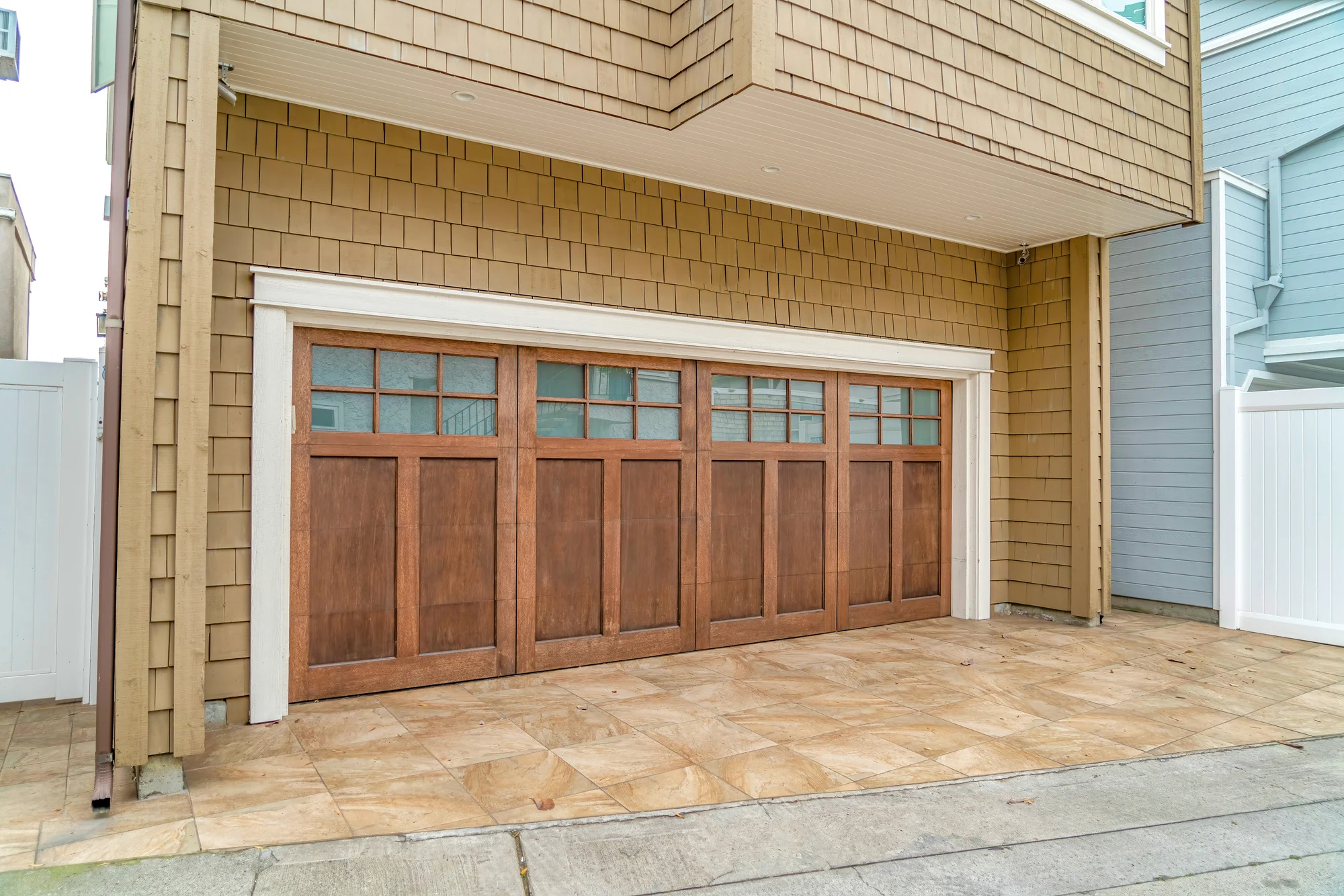
Choosing a garage door material becomes much easier when you start with your home’s architectural style. The goal is to make the door feel like a natural extension of the exterior, not something that stands out for the wrong reasons.
Material, finish, and texture all play a role in how well the door blends in or enhances the overall look.
Here’s a simple way to match common home styles with the right garage door materials:
| Home Style | Best Material Options | Why It Works |
|---|---|---|
| Modern | Aluminum, steel, glass (full-view) | Clean lines and smooth finishes match the minimal, structured look of modern homes. Glass and aluminum add a sleek, open feel. |
| Farmhouse | Wood, composite (faux wood), steel with wood-look | Warm textures and natural finishes complement the rustic, welcoming feel of farmhouse designs without losing durability. |
| Traditional | Steel, wood, composite | These materials support classic panel designs and neutral finishes, helping the garage door blend in with timeless exteriors. |
| Craftsman | Wood, composite, insulated steel | Craftsman homes focus on detail and texture, so wood or wood-look materials help highlight that handcrafted look while maintaining performance. |
| Ranch | Steel, vinyl, composite | Simple, horizontal layouts pair well with clean, durable materials that offer a balanced look without too much ornamentation. |
| Contemporary | Aluminum, steel, glass, composite | Contemporary homes benefit from a mix of modern finishes and subtle textures, allowing flexibility between sleek and warm design elements. |
When Should You Replace Your Garage Door Material Instead of Repairing It?
Repair makes sense when the issue is small and contained. A minor dent, a single damaged panel, worn weatherstripping, or a hardware problem can often be fixed without replacing the whole door. If the material is still in good shape and the door opens safely, repair is usually the more practical first step.
Replacement becomes the better choice when the material itself is failing or the door no longer supports how you use the garage. If rust keeps returning, several panels are damaged, the insulation is poor, or repairs are becoming too frequent, a new door may save you more trouble over time.
It is also worth considering a replacement if your current door looks outdated, feels less secure, or no longer improves energy efficiency.
Signs replacement may be the better option:
- Recurring rust that keeps spreading after repairs
- Major dents, cracks, warping, or panel damage
- Poor insulation that makes the garage uncomfortable
- Frequent repair calls for the same door
- An outdated look that affects curb appeal
- Weak security or old hardware
- A door that no longer fits your energy, safety, or design goals
Choose the Right Garage Door Material With Stewart Overhead Door
Garage door materials offer plenty of options, but the right choice should fit your home, climate, budget, and daily use. A good door should look right, hold up well, and make your garage easier to live with over time.
Here’s what to do next:
- Look at your home and climate first. Think about moisture, cold weather, sun exposure, insulation needs, and the exterior style of your home.
- Compare materials by maintenance and performance. Shortlist the materials that match your priorities, whether that is low upkeep, better insulation, stronger security, or curb appeal.
- Talk to Stewart Overhead Door for expert guidance. With over 60 years of experience, Stewart Overhead Door can help you compare garage door materials, choose the right design, and get dependable installation or repair support.
If you are ready to upgrade your garage door, contact Stewart Overhead Door to find a material that looks good, works well, and holds up in Ontario weather.