


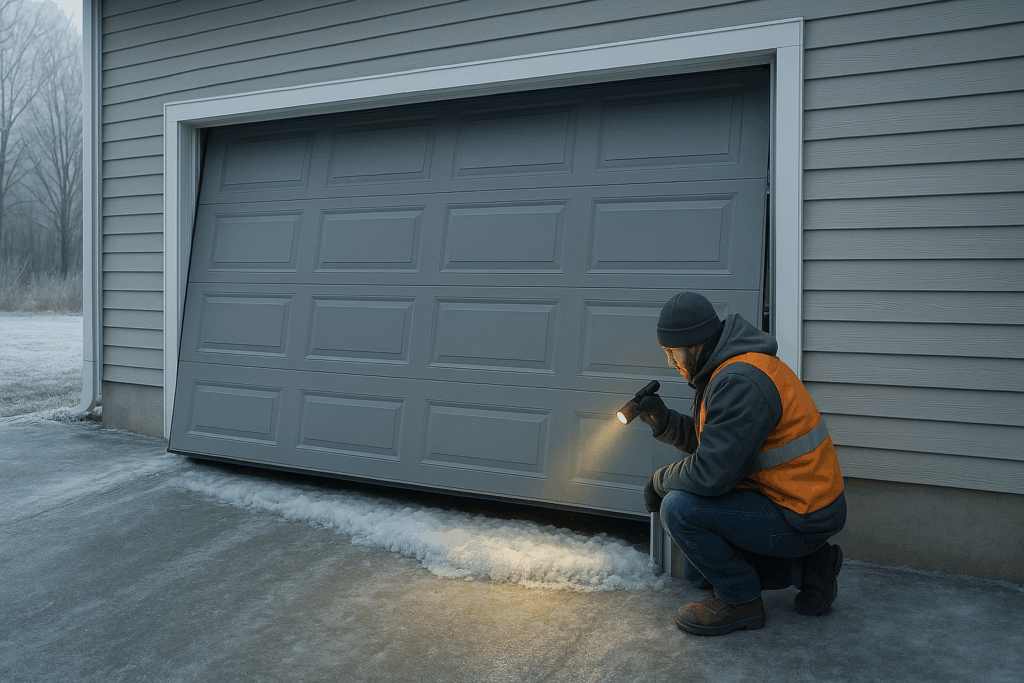
The Culprit Behind a Frozen Garage Door and the Best Fixes
Key Takeaways
1. Frozen garage doors are a winter warning, usually indicating that the bottom seal has frozen to the ground or that the cold has stiffened parts.
2. Five main culprits cause winter door problems: frozen seal, broken springs, contracted metal, hardened grease, and worn weather stripping.
3. Stewart Overhead Door keeps your door reliable in cold weather with planned maintenance service checks and adjustments.
What Does a Frozen Garage Door Mean for Your Home in Winter?
A frozen garage door cannot move freely because ice has bonded the bottom seal to the garage floor or stiffened key parts, making it essential to prevent ice and keep the garage door from freezing, leaving your garage door frozen and making your main parking and storage entry unreliable in winter and more prone to becoming stuck.
Frozen garage door problems are one of the most common winter surprises for homeowners. With roughly 63% of U.S. housing units featuring a garage or carport, a door that sticks after a hard freeze is no rare edge case. It is something a large share of households will see at some point in cold weather.
In some cases, low temperatures also harden lubricants and cause metal components to contract, making the garage door feel heavier and more difficult to lift. This is different from ordinary mechanical issues, because the door may work normally on milder days and then act like a garage door frozen shut after a sharp freeze.
It can trap your car when you need to leave for work, delay school drop-offs, or leave the home less secure if the door will not close fully after you manage to open it, mainly when a garage heater or space heater is not used. Repeated attempts to force the opener can bend panels, stress springs, or damage the door opener motor.
This is where Stewart Overhead Door and its planned maintenance services become essential. We help inspect seals, adjust hardware, and apply winter-ready lubricants before freezing weather sets in.
Our technicians help reduce the chance that a frozen garage door will disrupt your comfort, your schedule, or your family’s safety when temperatures drop.
Top 5 Reasons Why Your Garage Door Gets Stuck in Winter and How to Fix It
When the temperature drops, a garage door that usually works fine can start sticking, jerking, or refusing to budge on the coldest mornings, leading to a garage door stuck situation. Here are five common winter issues, especially during extreme cold, and what you can do to fix each one before it becomes a bigger repair.
1. Frozen Door
A frozen door usually means the bottom seal has bonded to ice on the ground after snow and ice or melting slush refreezes overnight. You press the opener, and the garage door shudders or barely moves because it is literally glued to the ground by a thin layer of ice.
You should treat this as a seasonal condition that needs careful handling rather than something to “muscle through.” Forcing the opener can damage panels or strain the motor. A better approach is to release the door gently, clear the ice, and then focus on prevention so it does not recur all winter.
How to fix a frozen garage door:
-
Release the opener. Pull the emergency release cord so the opener is not pulling against the ice.
-
Find where it is frozen. Check the bottom of the door and sides for ice buildup, packed snow, or slush that may be holding the door in place.
-
Melt the ice safely. Use de-icer, warm (not boiling) water, or a hair dryer/blow dryer on low heat along the threshold, then gently chip softened ice with a plastic ice scraper. Avoid boiling water, which can crack concrete.
-
Lift the garage door manually. Once the ice is loose, raise the door slowly by hand to confirm it moves smoothly.
-
Clear and dry the threshold. Remove leftover slush, rock salt, and moisture under the weather seal so it does not refreeze after the door closes again.
2. Broken Garage Door Springs in Winter
Winter door problems are not all the same, and broken garage door springs are very different from a simple frozen door, just as issues with damaged or worn components can lead to different scenarios.
Springs carry most of the door’s weight and help it lift smoothly, so when one breaks, the door suddenly feels very heavy or will not move at all.
Many homeowners first notice this on a cold morning. The door that worked yesterday will not open today. You may also hear a loud bang in the garage when the spring snaps, and see a visible gap in the coil above the door.
How to fix broken garage door springs:
-
Stop using the opener system. If the door will not lift or the door opener strains, stop running it to avoid burning out the motor.
-
Check for a visible gap in the spring. Look above the garage door for a broken torsion spring or hanging extension spring.
-
Do not try to lift a hefty door alone. A door with a broken spring can suddenly fall, causing injury or damage.
-
Call a professional technician. Schedule a spring replacement with a qualified garage door services company.
-
Ask about maintenance and spring lifespan. Have the technician inspect the full system and advise on how long new springs should last in your climate.
3. Contracted or Warped Metal in Cold Weather Issues
In many homes, the real issue in winter is metal that has tightened or shifted due to the cold. When temperatures drop, the steel panels, hinges, tracks, and springs all contract slightly.
Over time, this can make the door sit a little tighter in the opening. The rollers may not glide as smoothly in the tracks. The opener has to work harder to pull the same weight.
How to fix contracted or warped metal:
-
Lubricate key moving parts. Apply a garage-rated lubricant or silicone spray to rollers, hinges, and springs to help them move freely in cold weather.
-
Wipe tracks clean. Remove dirt, old grease, and light rust from the tracks to reduce friction along the garage floor line.
-
Check for visible rubbing. Look for shiny scrape marks on panels or tracks that show where the garage door is binding.
-
Tighten loose hardware gently. Snug up loose hinge bolts or track brackets if you can see movement when the door operates.
-
Call a professional if stiffness continues. If the door still feels heavy or crooked after basic care, have a technician realign the system before parts wear out.
4. Hardened Grease in Cold Weather
Hardened grease can cause a garage door to freeze even when there is no ice on the ground. In low temperatures, older or heavy grease thickens and loses its smooth, slippery feel. Instead of helping parts glide, it turns into a sticky paste that slows everything down. Rollers may drag in the tracks.
Hinges may move in short jerks. The opener has to pull harder on every cycle. You may hear louder grinding or squeaking in winter than in summer, even though you have not changed how often you use the door.
How to fix hardened grease:
-
Clean off old grease. Use a suitable grease solvent on rollers, hinges, and other moving parts to loosen thick build-up.
-
Work the solvent into tight spots. Use a small, firm brush such as a toothbrush to reach cracks and corners.
-
Wipe everything dry. Remove the softened grease and solvent with a clean cloth, leaving no residue.
-
Apply a silicone-based lubricant. Spray or apply a light coat on the moving parts, not on the tracks themselves.
-
Test the door through a few cycles. Open and close the door several times and listen for smoother, quieter movement.
5. Worn Weather Stripping in Winter
Worn weather stripping often sits in the background until you start fighting frozen garage door problems every cold morning.
The flexible seal around the edges and bottom of the door is meant to keep out cold air, snow, and meltwater. In winter, that seal can crack, flatten, or break away from the door. Once that happens, cold wind and moisture move straight into the garage.
How to fix worn weather stripping
-
Inspect the seal all around the door. Look for cracks, gaps, or spots where light shows through around the edges or bottom.
-
Clean the contact surfaces. Wipe dirt and old adhesive from the door frame and bottom so new seals will bond properly.
-
Replace damaged weather stripping. Fit new side and top seals and, if needed, a new bottom seal that matches your door style.
-
Check the door’s closing line. Close the door and confirm the seal touches the floor evenly, with no significant gaps.
-
Schedule professional help if gaps remain. If you still see drafts or daylight after replacement, have a technician adjust the door alignment before the next cold snap.
Keep Your Garage Door Moving All Winter With Stewart Overhead Door
A stuck or frozen garage door in winter is usually the result of several small issues coming together: ice at the threshold, weakened springs, contracted metal, hardened grease, and worn weather stripping.
When you stay ahead of these problems, your door runs smoothly, your opener works less, and your garage stays drier and more comfortable through the coldest weeks.
Here’s your next three steps:
-
Do a quick safety check before winter. Look over springs, cables, rollers, and seals. Watch the garage door open and close once and note any heaviness, scraping, or sticking.
-
Start basic winter care. Keep the area under the door clear of snow, ice, and ice melt residue. Lubricate rollers, hinges, and springs with a suitable garage-rated product, and replace cracked weatherstripping so the door seals properly.
-
Book planned maintenance with Stewart. If the door still feels heavy or unreliable, schedule aPlanned Maintenance Service withStewart Overhead Door Co. Ltd. Call (519) 652-8312 or request service online to keep your garage door moving all winter smoothly.
Call (519) 652-8312 or request service online to keep your garage door moving smoothly all winter.